
Nurse Call Bell Systems
Every hospital relies on one metric above all: response time. A patient calling out for help should never depend on chance. Rincon India delivers zero-wiring, zero-IT-dependency wireless nurse call points tailored to modern medical operations.
Why traditional buzzer systems fail your ward?
A nurse on a busy ward is often responsible for far more patients than is comfortable. A patient in pain, a dislodged IV line, a fall in the bathroom, a sudden change in a patient's condition — all of these moments depend on one thing: how quickly the nurse finds out.
In most Indian hospitals, this still relies on outdated methods. A patient calls out and hopes someone passes by. A relative runs into the corridor looking for staff. A wired buzzer system installed years ago has half its call points broken and nobody has had the budget or the urgency to fix it.
The Cost of This Gap Shows Up In:
- Delayed response in genuine emergenciesThe minutes between a fall and a nurse arriving matter
- Inconsistent careNurses cannot prioritise what they do not know about
- Lower patient satisfaction scoresA major factor in hospital ratings and repeat business
- Accreditation riskNABH and JCI assessors specifically look at response time protocols
- Staff burnoutNurses constantly walking the corridor 'just to check' is exhausting
Risk areas across your facility
General Wards
Patients need a reliable way to call without shouting or relying on a roommate to fetch help.
ICU & HDU
Where every second counts, the alert needs to reach the right nurse immediately, not whoever is nearby.
OPD & Waiting Areas
Coordinating patient flow and calling the next patient without a queue crowding the consultation door.
Isolation Rooms
Where staff entry should be minimised, a wireless call point lets patients summon help remotely.
Dialysis & Day Care Units
Patients seated for extended periods need an unobtrusive way to flag discomfort or equipment issues.
Accessible & General Toilets
Statistically the highest-risk location for patient falls, requiring waterproof calling hardware.
OT & Recovery
Coordinating between OT staff, recovery nurses, and anaesthesia teams during a sensitive window.
The SOLT wireless nurse call solution
Rincon India brings you SOLT's wireless nurse call bell system from South Korea — a purpose-built solution for exactly this problem, already deployed across hospitals in India for over a decade.
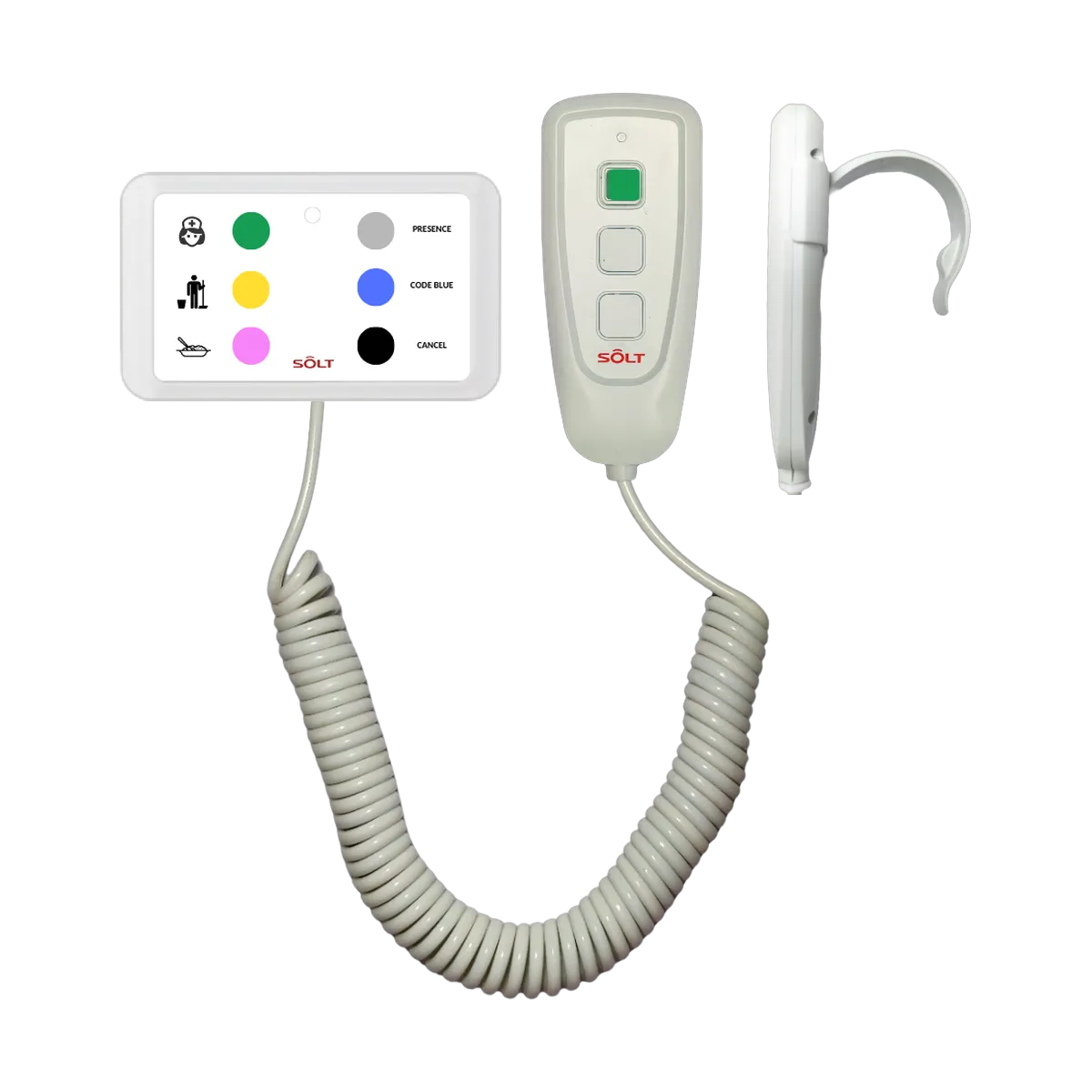
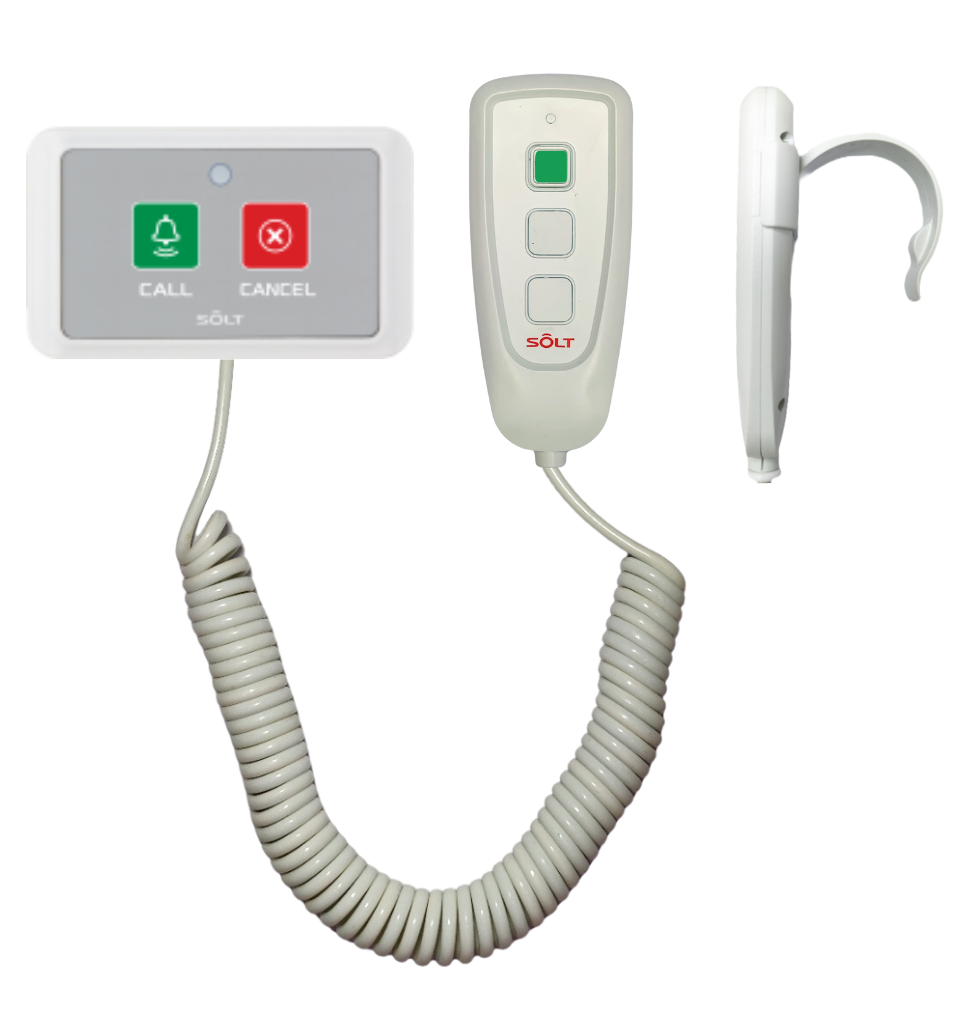
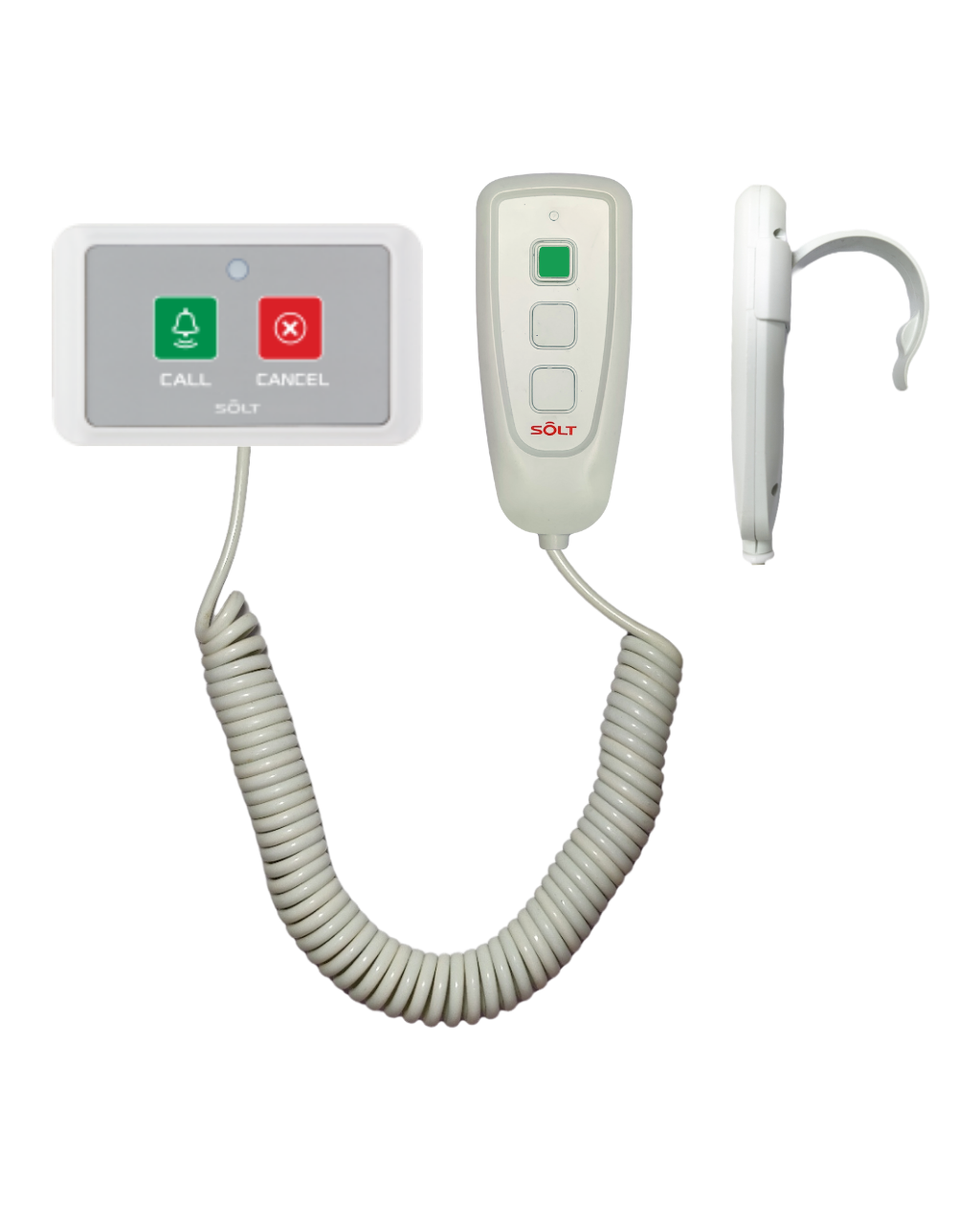
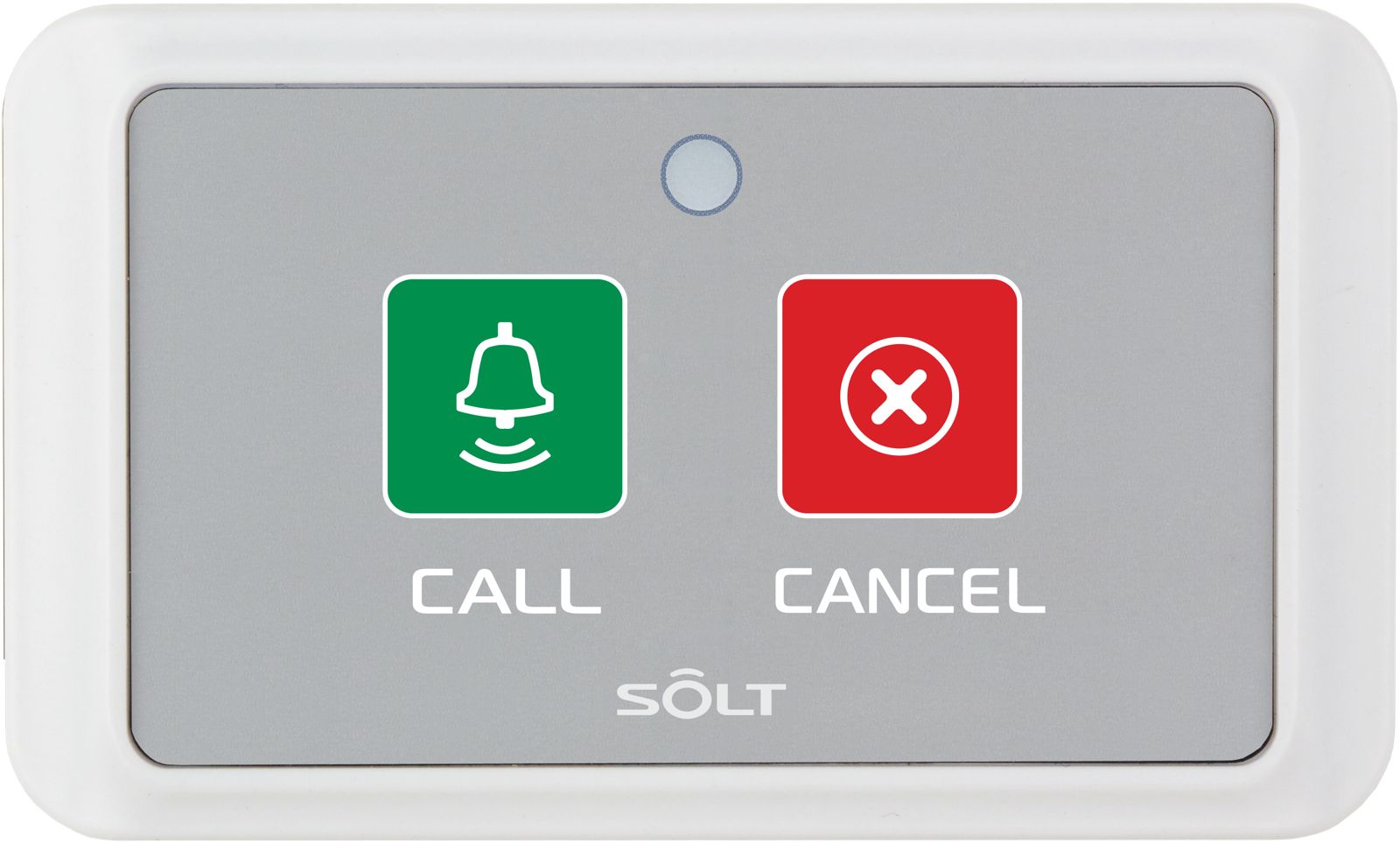
SOLT Bedside Pendant & Wall Point
How It Works
A patient presses a call point — a bedside pendant, wall-mounted button or a waterproof pull-cord in the bathroom.
The signal transmits instantly over 433 MHz RF — no Wi-Fi, no SIM card and no dependency on the hospital's IT network.
A central display panel at the nurses' station and handheld pagers carried by duty staff receive the alert immediately, showing the exact bed or room number.
The nurse acknowledges the call, attends to the patient, and the system logs the response time.
Why SOLT?
No Infrastructure Dependency
Hospital Wi-Fi networks are congested or dead in basement zones. RF signals bypass IT setups completely, ensuring calls always get through.
Built for Healthcare
Leak-proof dry battery cells eliminate internal corrosion. Waterproof button designs hold up under hospital cleaning fluids and humidity.
Minimal Maintenance
Each call point operates on dry cell batteries designed to support thousands of activations, making replacements a rare event.
Quick Installation
No running cables or drilling conduit. Most hospital wards can be completely fitted and operational in a matter of hours.
Scales as You Grow
Whether equipping a 10-bed ward or a 300-bed multi-specialty block, modular hardware scales effortlessly.
Prioritised Alert Categories
Alert buttons can be configured so critical alarms (Code Blue) trigger differently from routine support calls on displays.
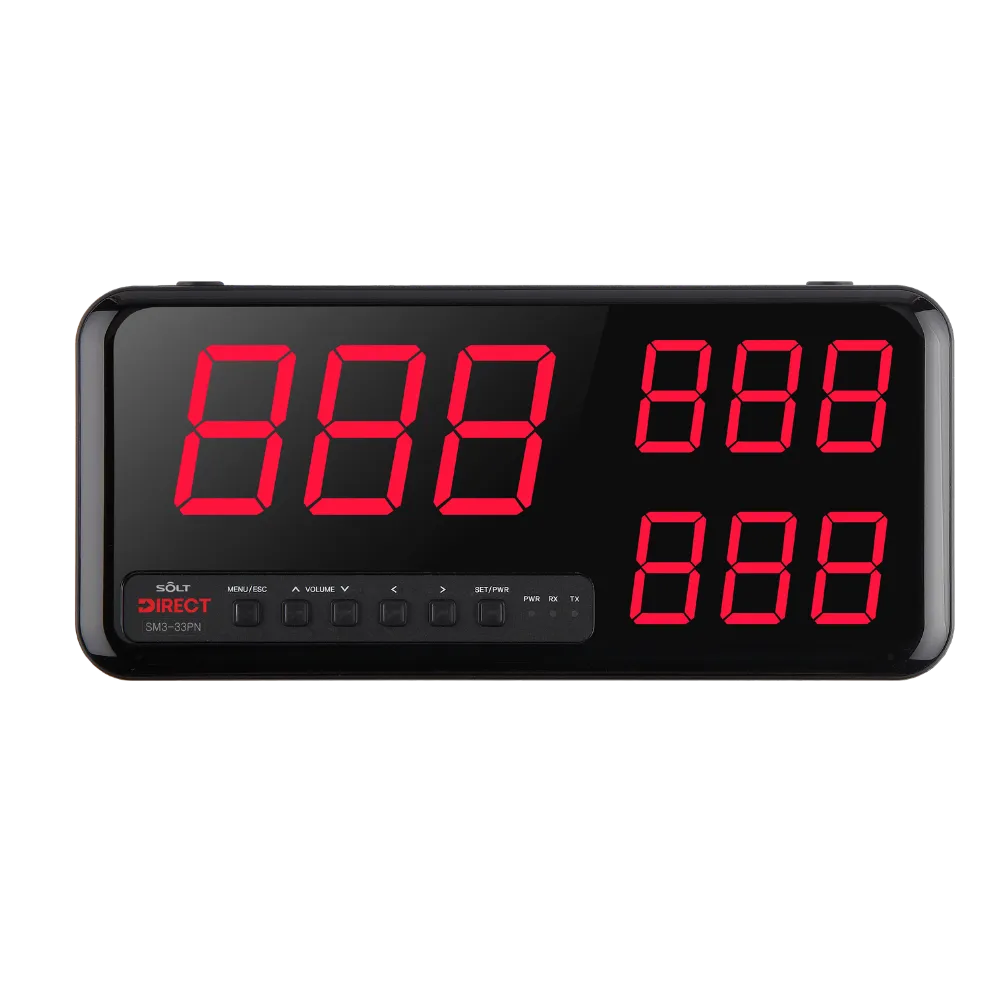
Nurse station display panel
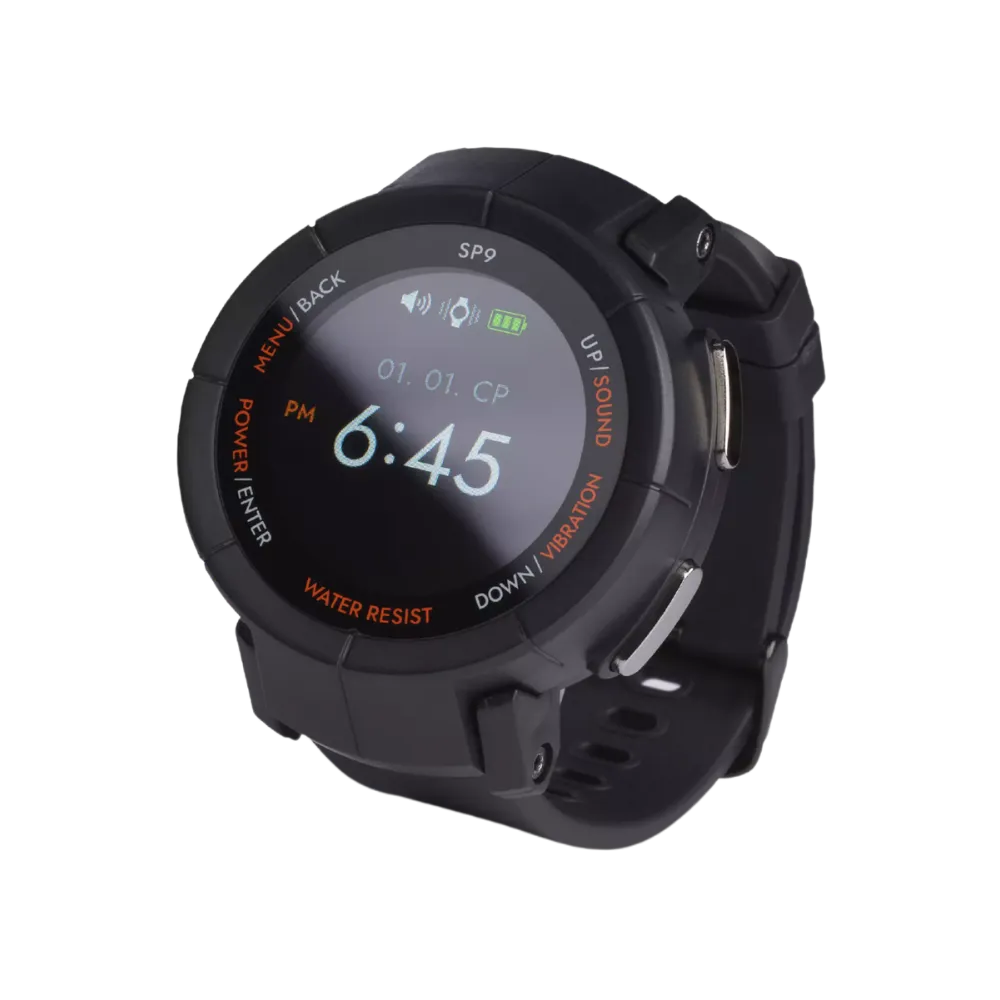
Handheld Pager / Wristband Receiver
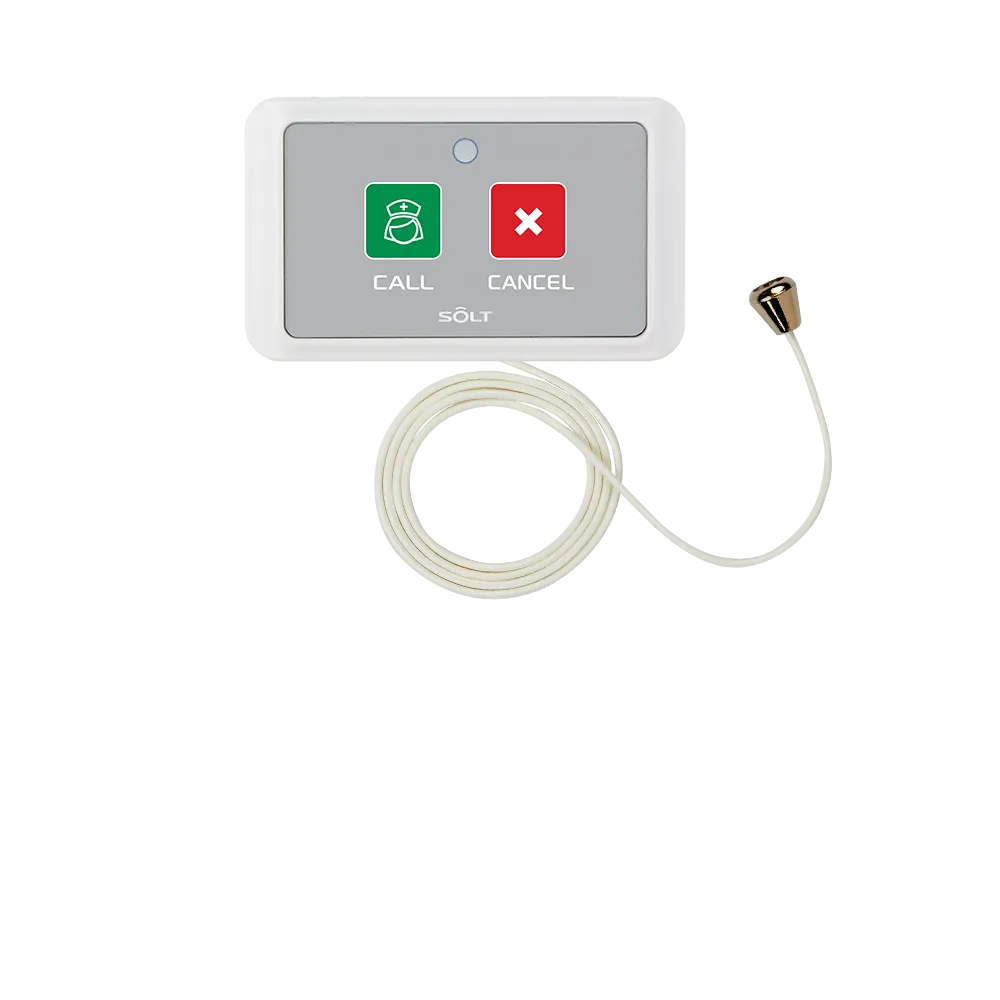
Toilet Pull Cord Call Point
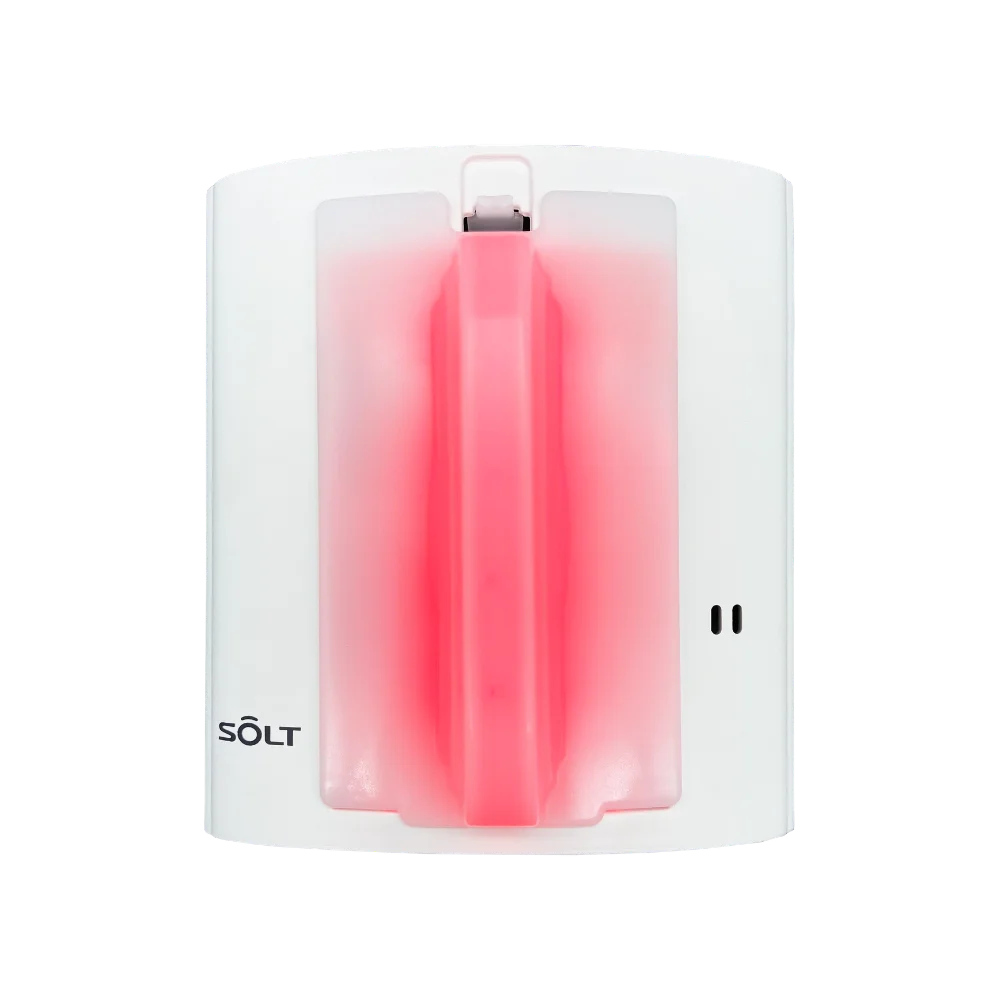
Corridor Indicator light
Supports Your Compliance Requirements
NABH and JCI standards place specific emphasis on documented response times and the systems that support them. A wireless call bell system with logged response data gives you the evidence trail that manual systems simply cannot provide.
International Standard Certifications




Frequently Asked Questions
Yes. The 433 MHz RF frequency used by SOLT penetrates standard building materials reliably, including concrete and across floor slabs, far better than Wi-Fi-based alternatives.
The system flags low battery status well in advance on the central panel, so your maintenance team can replace it before it becomes a problem. Battery life is typically measured in years of standard use, not months.
Yes. The system is designed to be modular. You can add call points, displays and receivers incrementally as your hospital expands, without needing to overhaul the existing installation.
Yes. Waterproof pull-cord and push-button variants are specifically designed for bathroom and wet-area use, where fall risk is highest.
Wired systems require cabling through walls and ceilings, are expensive to repair when something breaks, and are difficult to extend. A wireless system avoids all of this, installs faster and is significantly easier to maintain over its lifetime.
Yes. The system supports distinct categories, such as routine assistance, bathroom emergency and Code Blue, so staff can prioritise their response correctly the moment the alert appears.
No. The system operates entirely independently of your hospital's Wi-Fi or LAN, so there is no IT dependency and no risk of the call system being affected by network downtime.
For a standard ward, installation is usually completed within a day, with minimal disruption to patients and staff. Larger, multi-ward installations are scheduled in phases to avoid disrupting hospital operations.
See it in action before you decide.
Every hospital is laid out differently, and the right call bell configuration depends on your wards, your floor plan and your patient load. The best way to evaluate this is to see the system working and talk through your specific requirements directly with our team.
Book a call or a web session at a time that suits you. We will walk you through how the system works, answer your questions and understand your hospital's specific needs — wards, bed count, problem areas — so we can recommend the right configuration.
Call +91 9321064487 or email sales@rincon.co.in